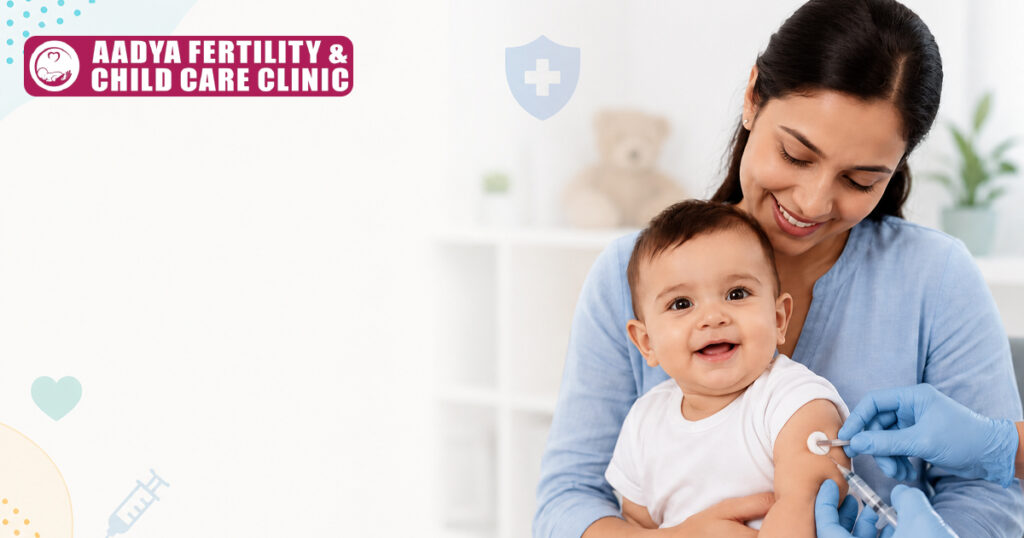
Parents in Greater Noida West often come in with a mixed vaccination record — some doses done at a government centre, some at a private clinic, some entered on a card that has since been lost. It is more common than people realise, especially in a township that has grown so quickly, where families have moved, changed paediatricians, or simply fallen behind.
What I want to explain here is the difference between the two vaccination frameworks in India, what the complete recommended schedule looks like, and what happens when doses are missed. This is the same information I give parents at the first visit.
Two schedules — one free, one more complete
India’s Universal Immunisation Programme (UIP) is run by the government and provides free vaccination at government centres. It covers the core vaccines — BCG, OPV, DPT, Hepatitis B, and Measles. For families who cannot access or afford private vaccination, it is an important foundation.
The IAP schedule — recommended by the Indian Academy of Pediatrics — includes several additional vaccines that the government programme does not: varicella (chickenpox), hepatitis A, typhoid, influenza. These are not optional extras designed to sell more vaccines. They target conditions that cause significant illness and hospitalisation in Indian children. The additional vaccines in the IAP schedule exist because the epidemiology in India justifies them.
At Aadya I follow the IAP schedule. Here is what it looks like from birth.
The IAP schedule — from birth to adolescence
At birth
- BCG
- Hep B-1ᵃ
- Oral Polio Vaccine
6 weeks
- Hep B-2
- Inactivated Polio Vaccine-1ᶜ
- DTwP/DTaP-1
- Hib-1
- PCV-1
- RV-1
10 weeks and 14 weeks
- Hep B-3
- Inactivated Polio Vaccine-2ᶜ
- DTwP/DTaP-2
- Hib-2
- PCV-2
- RV-2
6 months
- Influenza IIV-1ᵉ
- 9 months
- TCV
- months
- Influenza IIV-2
9 months
- Meningococcal-1ᶠ
- MMR-1ᵍ
12 months
- Hepatitis A
- Meningococcal-2
- JE-1ᵐ
- Cholera-1
13 months
- JE-2ᵐ
- Cholera-2
12–18 months
- PCV booster
15 months
- MMR-2
- Varicella-1
16–18 months
| · Inactivated Polio Vaccine B1ᶜ |
| · DTwP/DTaP-B1 |
| · Hib B1 |
18 – 24 months
- Hepatitis A-2ᶠ
- Varicella-2ᵍ
4–6 years
- Inactivated Polio Vaccine B2ᶜ
- DTwP/DTaP-B2
- MMR-3
9-14 years
- Tdap/Tdʰ
- HPV-1ʲ
- HPV-2ʲ
15-18 years
- HPV-1ᵏ
- HPV-2ᵏ
- HPV-3ᵏ
16 years
- Tdap — tetanus, diphtheria, acellular pertussis booster
The vaccines parents most often skip — and why I ask about them Annual influenza. Parents skip this because flu seems manageable. In children under five, influenza causes significant hospitalisations in India. The vaccine is reformulated annually because the virus mutates — last year’s shot does not protect against this year’s strains. I ask about it at every visit.
Varicella (chickenpox). The common belief is that chickenpox is mild and that getting it naturally is fine. Chickenpox can cause bacterial superinfection, encephalitis, and in rare cases is fatal. The vaccine is considerably safer than natural infection. I have admitted children for chickenpox complications. It is not always mild.
HPV. This vaccine prevents cervical cancer. India has one of the highest rates of cervical cancer mortality in the world. The vaccine is most effective when given before any exposure, which is why 10 to 12 is the right window — not later. The discomfort parents feel about a cancer-related vaccine given at this age is understandable, but the biology does not wait.
Hepatitis A. Highly relevant in India given water and food contamination, especially during monsoon. Greater Noida West is still developing infrastructure in parts — the risk is local, not theoretical.
When doses are missed
Most missed doses can be caught up without restarting the series. The IAP has catch-up schedules that account for gaps. Bring your child’s vaccination card to the appointment — even if it is incomplete or from another clinic — and I can map exactly what is outstanding and what order to complete it in.
The most important thing is keeping one consistent record from birth. When families move between clinics or cities, that card is the only complete history. Digital records across platforms rarely transfer cleanly.
What to expect after vaccination — and when to call
Normal reactions in the 24 to 48 hours after a vaccine: mild fever, soreness at the injection site, fussiness, reduced appetite. Weight-appropriate paracetamol handles the fever. A cool cloth on the injection site helps the soreness. These pass.Call or bring the child in immediately if: fever goes above 40°C (104°F), the child cries inconsolably for more than 3 hours, there is swelling that spreads significantly beyond the injection site, the child has difficulty breathing, or there is a seizure. These are rare.
Serious reactions to vaccines occur far less commonly than serious complications from the diseases they prevent. But they do exist, and you should know what to watch for.
The pediatric OPD at Aadya runs Monday to Saturday from 7 to 9 PM and Sunday from 12 to 2 PM. Walk-ins are welcome for vaccination. Bring the card.
A few questions I get often
Can multiple vaccines be given at the same visit? Yes. Combination vaccines are designed for this, and the immune system handles multiple antigens without difficulty. Giving them together reduces the number of visits and does not increase reaction risk.
Is DTaP safer than DTwP? DTaP uses acellular pertussis components and tends to cause fewer local reactions. Both are effective. DTaP is generally preferred for children who had a significant local reaction to a previous DTwP dose.
My child missed the 6-week vaccine — can we still start? Yes. Speak to your pediatrician about a catch-up schedule. Starting late is better than not starting. The series can be completed regardless of when it begins, as long as the intervals between doses are maintained.